


Targeted SPF for your two most UV-exposed zones. Zinc oxide face formulas that are non-comedogenic, reef-friendly, and lightweight. Broad-spectrum SPF lip protection built for daily reapplication. Dermatologist-tested. Made in USA.
What Is Face and Lip Sun Protection?
Your face is the most UV-exposed area on your body. It faces upward toward the sun during most outdoor activity, absorbs radiation through car and office windows during your commute, and receives UV year-round regardless of season or cloud cover. Your lips compound that exposure by angling directly toward the sky, with essentially zero natural UV defense of their own. Face and lip sun protection means choosing products designed specifically for those areas rather than adapting body sunscreen to a job it was not built for. Body sunscreens are formulated for larger surface areas and typically carry heavier textures, higher fragrance loads, and oil-based ingredients that are perfectly fine on the arms and legs but can cause breakouts, pilling, and irritation when applied to the face. The SolRX Face and Lip collection brings targeted SPF to both zones: zinc oxide face formulas deliver broad-spectrum UVA and UVB protection in a lightweight, non-comedogenic finish designed for daily wear and layering under makeup, while SPF 15 Lip Ice brings broad-spectrum protection to lip skin, which carries no melanin for natural UV defense and is one of the most consistently skipped protection zones in any daily routine.
Zinc Oxide Face Sunscreen: Why Dermatologists Reach for It First
Zinc oxide has earned its place as the dermatologist-preferred UV filter for facial skin, and the reasoning goes well beyond marketing. Unlike most chemical filters, which target UVA or UVB rays but not both, zinc oxide delivers genuine broad-spectrum protection from a single ingredient. The FDA classifies it as one of only two sunscreen actives that are Generally Recognized as Safe and Effective, a distinction no chemical filter currently holds. The properties that make zinc oxide ideal for the face extend beyond its UV coverage. It is non-comedogenic, meaning it will not clog pores or contribute to breakouts. It is naturally anti-inflammatory, which is why dermatologists routinely prescribe it for patients with rosacea, eczema, and post-procedure skin sensitivity. Chemical sunscreen actives work by absorbing UV energy and converting it to heat within the skin tissue. For reactive skin types, that heat generation is a real trigger for flushing, stinging, and irritation. Zinc oxide reflects and scatters UV radiation before it reaches the skin, producing no heat buildup and no sensitization. SolRX zinc oxide face formulas use non-nano particles, sized too large to penetrate the skin barrier. The protection stays where you put it. Non-nano zinc oxide is also reef-friendly, meeting the standards set by Hawaii Act 104 and recognized reef-destination requirements globally. Explore the full reef-safe sunscreen collection for body formulas that meet the same standard.
The Face Stick Advantage
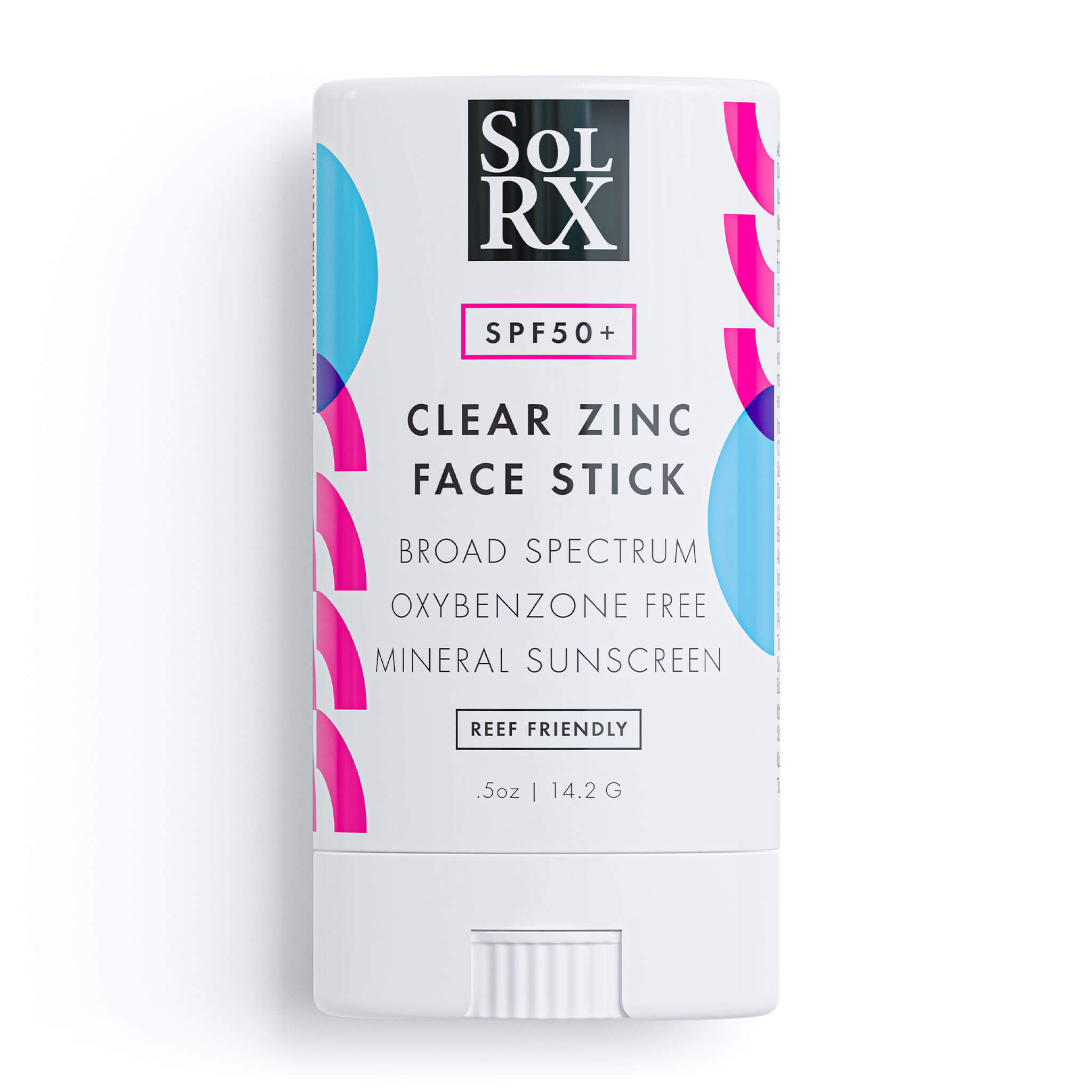
The Clear Zinc SPF 50 Face Stick brings something face sunscreen has historically lacked: precision without mess. Traditional lotions and creams require clean hands, careful blending, and a deliberate routine that most people skip when they are heading out the door or mid-activity. A stick applies directly to the skin with zero transfer, no product on your fingertips, and no risk of getting formula in your eyes. That matters on the face more than anywhere else. The eye area, the bridge of the nose, and the upper cheekbones are high-exposure zones that often get underprotected because lotion application near the eyes is uncomfortable and imprecise. A stick applies exactly where you direct it, which means better coverage in the spots that actually need it most. The travel-size format puts full SPF 50 face coverage in your pocket, gym bag, or carry-on without the weight or bulk of a lotion tube. Reapplication during outdoor activity, between rounds on the course, or at the trailhead becomes a ten-second task rather than a production. For the water resistant sport days when every barrier to reapplication leads to skipped applications, that convenience has real consequences for how much protection you are actually getting.
SPF and Niacinamide: Two Heavy Hitters in One Formula
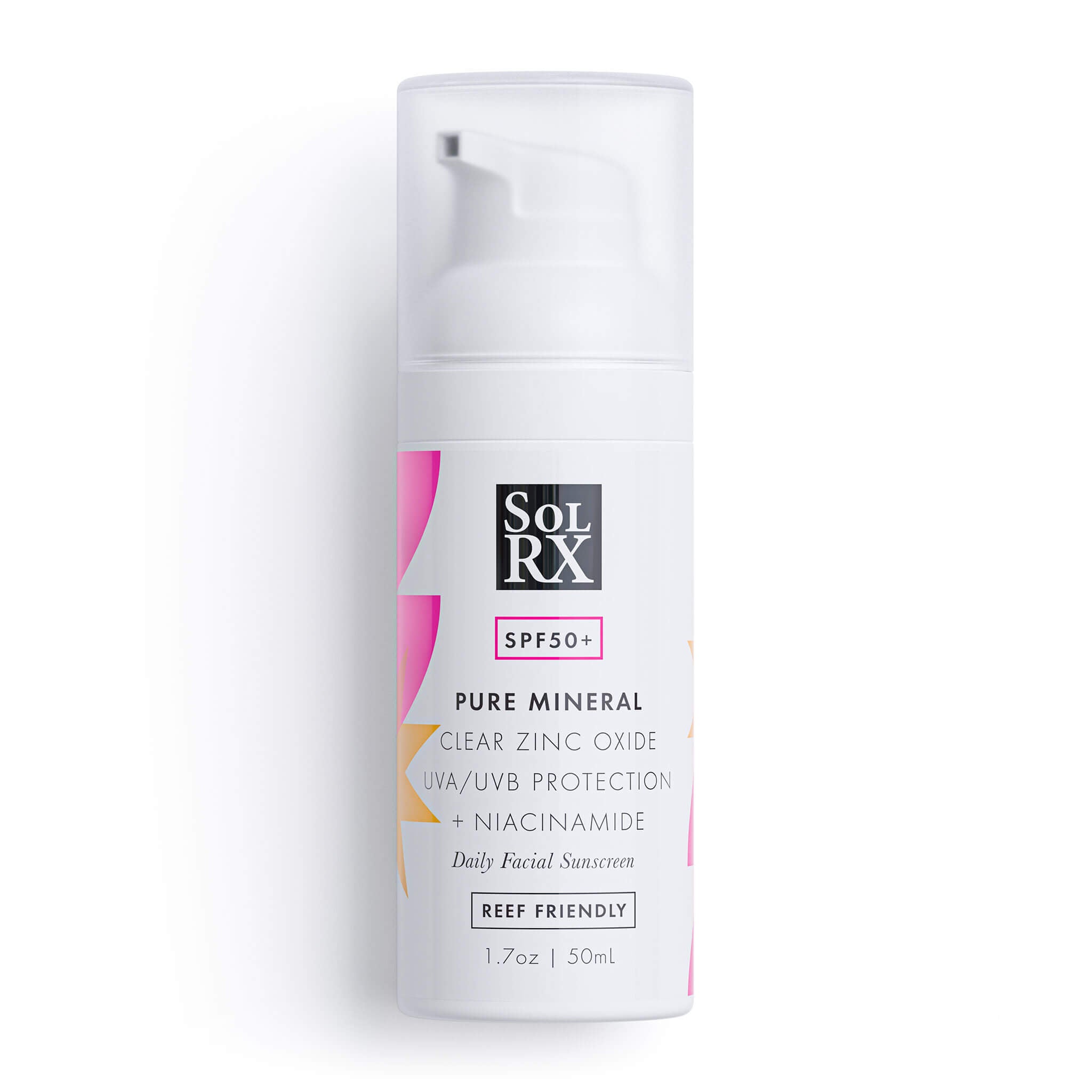
The Pure Mineral SPF 50 Face Sunscreen does two things a single-purpose sunscreen cannot: it protects against UV and actively works on the skin while it does it. Niacinamide, also called Vitamin B3, is one of the most researched ingredients in modern skincare. At effective concentrations it reduces the appearance of dark spots and uneven tone, supports the skin barrier, helps control excess oil production, and calms redness and surface inflammation. Pairing niacinamide with zinc oxide in a daily-wear formula means every morning application is working against both new UV damage and the visible signs of exposure that have already accumulated. For skin dealing with hyperpigmentation, post-acne marks, or the kind of tone irregularity that builds over years of unprotected sun exposure, that combination is genuinely useful rather than cosmetically incidental. Sun protection alone prevents new damage from forming. Niacinamide supports the skin in addressing what is already visible.
Lip SPF: The Protection Zone Almost Everyone Skips
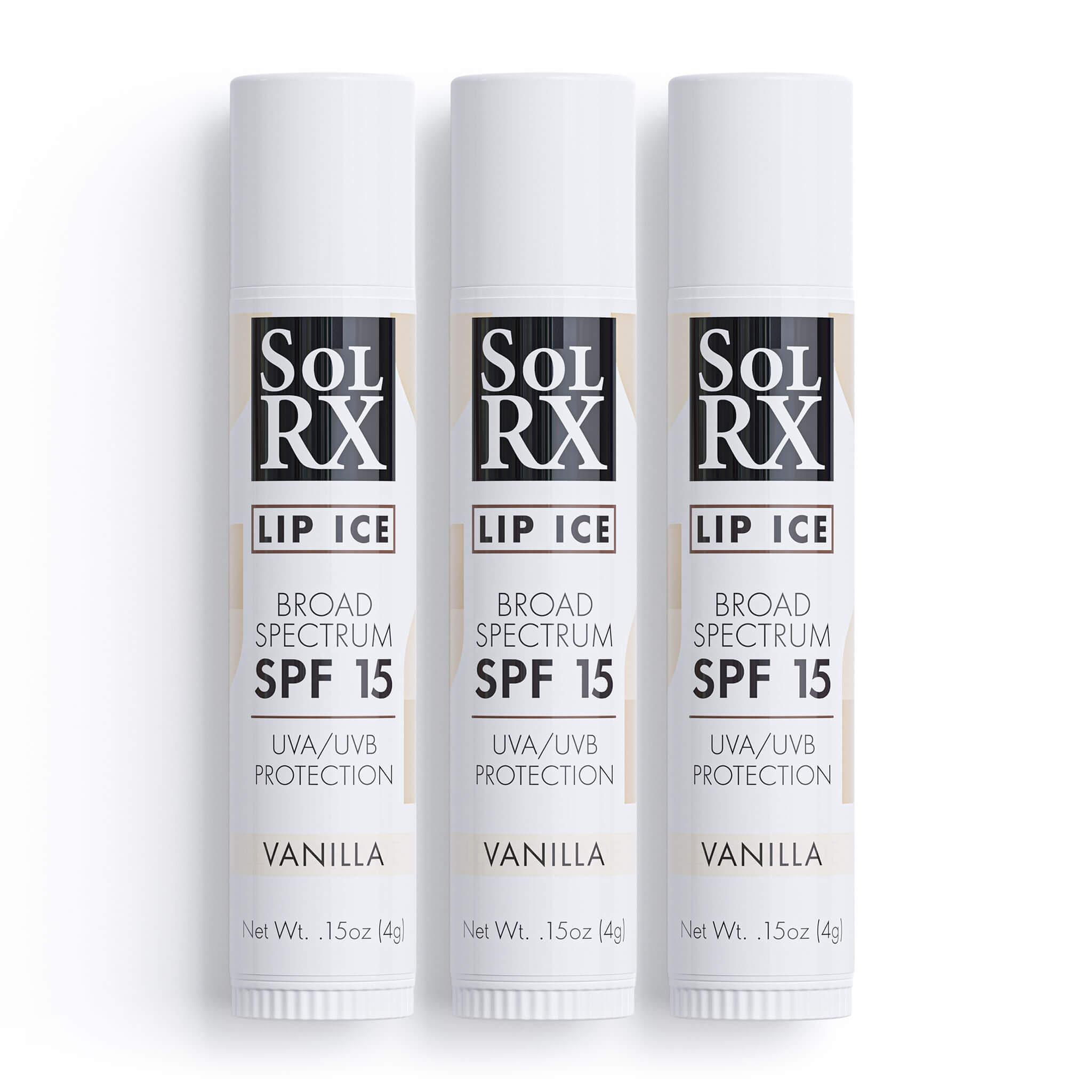
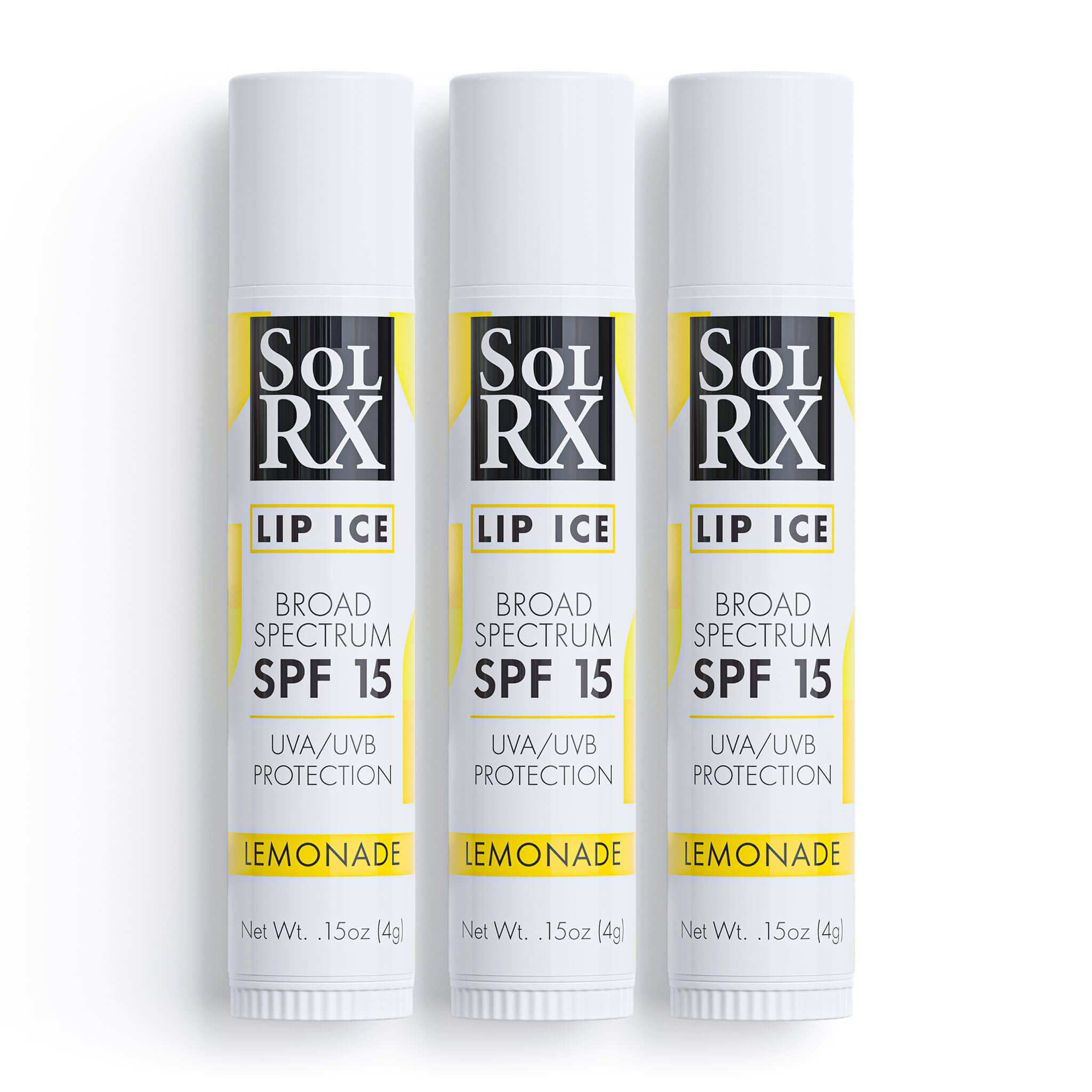
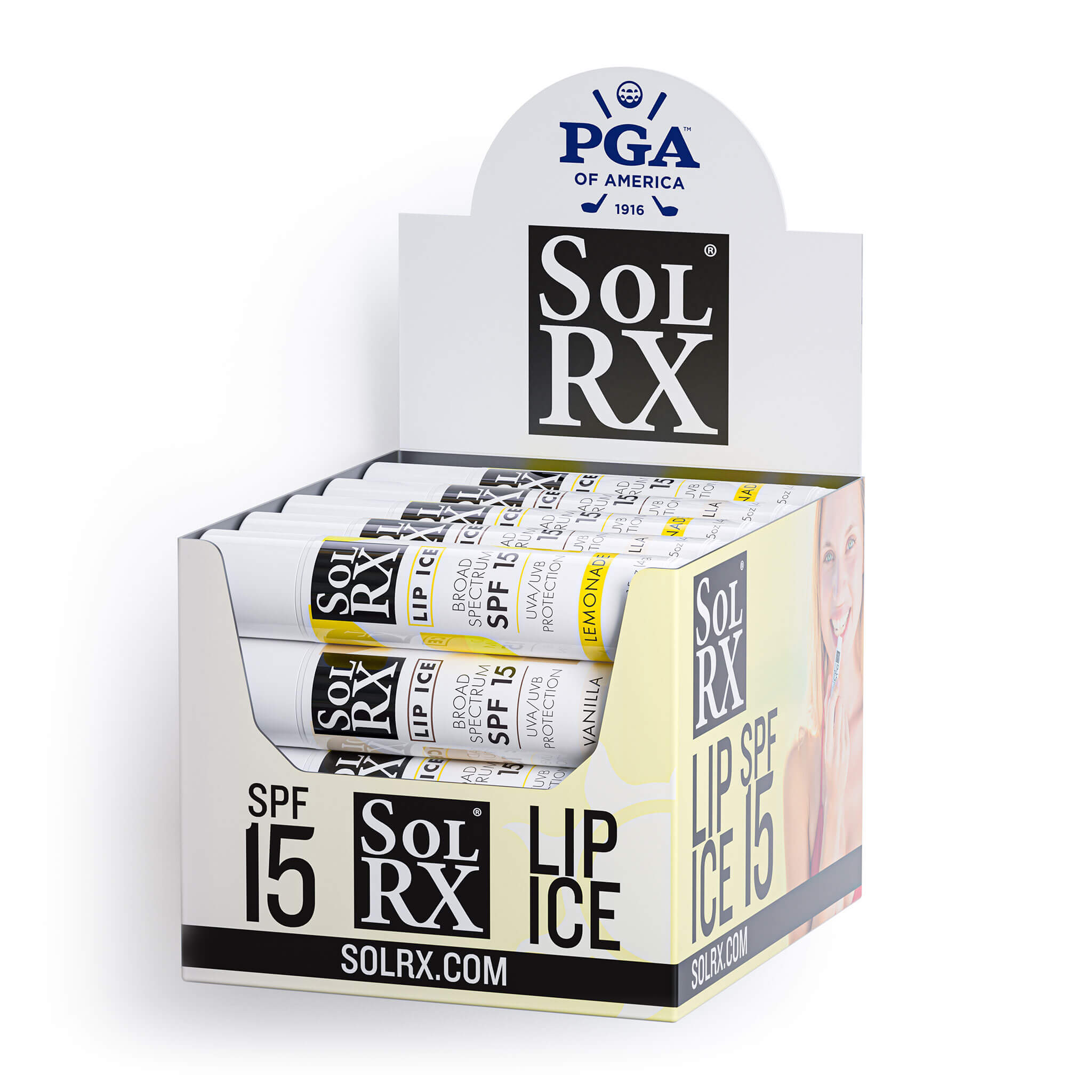
Your lips have no melanin. Melanin is the pigment that provides some baseline UV defense across the rest of your skin. Without it, lip skin has zero natural UV protection, and the upward-facing angle of the lower lip means it receives direct radiation throughout most of the day. Actinic cheilitis is a precancerous condition caused by chronic UV exposure to lip skin. It disproportionately affects the lower lip, producing rough, scaly patches that signal cellular change well before visible damage appears. Daily SPF lip protection is among the most consistent recommendations dermatologists give to patients concerned about long-term lip health. Standard lip balm without a Drug Facts panel and a stated SPF value provides zero UV protection. The wax and emollient ingredients in regular balms moisturize and seal in hydration, but they have no meaningful ability to block or absorb UV radiation. The only reliable indicator that a lip product is actually protecting you from sun damage is a Drug Facts panel listing active sunscreen ingredients with a stated SPF. SolRX Lip Ice SPF 15 delivers broad-spectrum UVA and UVB protection with a moisturizing formula that applies smoothly and stays comfortable throughout the day. That comfort matters because reapplication frequency, not just initial application, is what determines real-world lip protection. Available in vanilla and lemonade, keep one in your pocket, one in the car, and one in your gym bag so there is never a reason to skip it.
How to Apply Face Sunscreen Correctly
Most people apply roughly half the amount of sunscreen needed to actually achieve the labeled SPF. Under-application is the most consistent finding in sunscreen use studies and the most common reason people experience more sun damage than expected even when they believe they are protected. For the face, use approximately a nickel-sized amount and cover the full face, neck, ears, and exposed neck area. Ears are among the most frequently skipped areas and among the most common sites for basal cell carcinoma. Blend all the way to the hairline and jawline to eliminate coverage gaps at the edges. Apply as the last step of your morning skincare routine, after moisturizer and before makeup. Allow the formula to settle for a minute or two before applying foundation or tinted product. For the face stick, apply directly to each zone in short passes and blend lightly with clean fingertips if needed for a seamless finish. Reapply every two hours during extended outdoor exposure, or immediately after heavy sweating. Apply lip SPF at the same time as your face sunscreen every morning. Reapply every two hours during outdoor activity and after eating or drinking, which removes the formula faster than UV exposure alone.
Building a Complete Face and Lip Protection Routine
The most effective routine is the one you actually do every single day, not the most elaborate one you do occasionally. Simplicity and consistency are what drive results in sun protection. A complete daily face and lip routine looks like this: zinc oxide face sunscreen as the final morning skincare step, SPF lip balm applied at the same moment so it does not get forgotten, and a face stick in your bag or pocket for midday reapplication without disrupting your day. From there, build the system that matches how you actually live. For active days, beach trips, and outdoor sport, the water resistant collection brings the extended wear your activity demands. If sprays are part of your routine, the lotions and sprays collection covers both formats side by side. For families, the kids sunscreen collection rounds out full-household protection. And the sunscreen bundles make it easy to stock multiple zones of your life at once so you are never reaching for protection that is not there.
What the Science Consistently Shows About SPF and Aging
Approximately 80 to 90 percent of visible facial aging, including fine lines, dark spots, uneven texture, and loss of elasticity, is caused by UV exposure rather than the natural passage of time. Dermatologists call this photoaging. It is driven primarily by UVA radiation, which penetrates the skin deeply, breaks down collagen and elastin fibers, and accumulates silently over decades without ever causing a visible sunburn. Daily broad-spectrum face sunscreen is not primarily about preventing sunburn. It is about interrupting the most powerful driver of how your skin looks and ages over time. The clinical evidence is consistent: people who apply broad-spectrum SPF 30 or higher to their face daily show measurably less photoaging compared to those who reserve sunscreen for outdoor activities. The same cumulative UV exposure that drives aging also drives skin cancer risk. One in five Americans will develop skin cancer by age 70. Ninety percent of nonmelanoma skin cancers are associated with UV exposure over time. Daily face and lip SPF does not just protect how your skin looks. It protects your long-term health. See the full mineral sunscreen collection for additional zinc oxide options for face and body, and the sensitive skin collection for formulas designed around reactive and compromised skin types.
Key Takeaways
-
Zinc oxide is non-comedogenic, anti-inflammatory, and reef-friendly. It is the dermatologist-preferred UV filter for daily facial use.
It delivers true broad-spectrum coverage without clogging pores or triggering the skin reactions common with chemical actives. -
Daily broad-spectrum SPF is primarily about preventing photoaging, not just sunburn.
Up to 90 percent of visible facial aging is caused by UV exposure. Consistent daily application matters far more than SPF number. -
Your lips have zero natural UV protection and need dedicated SPF every single day.
Standard lip balm without a Drug Facts panel offers no UV defense. SolRX Lip Ice SPF 15 delivers broad-spectrum protection in a moisturizing formula built for frequent reapplication.
Sources
- U.S. Food and Drug Administration. Sunscreen: How to Help Protect Your Skin from the Sun. Updated 2023.
- American Academy of Dermatology Association. Sunscreen FAQs. 2024.
- Skin Cancer Foundation. Ask the Expert: Does a Daily Facial Moisturizer with SPF Really Protect? 2023.
- Lim HW, et al. Current challenges in photoprotection. Journal of the American Academy of Dermatology. 2017;76(3 Suppl 1):S91-S99.
- Burnett ME, Wang SQ. Current sunscreen controversies: a critical review. Photodermatology, Photoimmunology and Photomedicine. 2011;27(2):58-67.
- American Cancer Society. Skin Cancer Prevention and Early Detection. 2024.
- Skin Cancer Foundation. Actinic Cheilitis (Solar Cheilitis). 2023.
- U.S. FDA. Sunscreen Drug Products for Over-the-Counter Human Use. Federal Register. 2019.
- Green AC, et al. Reduced melanoma after regular sunscreen use: randomized trial follow-up. Journal of Clinical Oncology. 2011;29(3):257-263.
- National Rosacea Society. Sunscreen and Rosacea: Choosing the Right Formula. 2024.

