


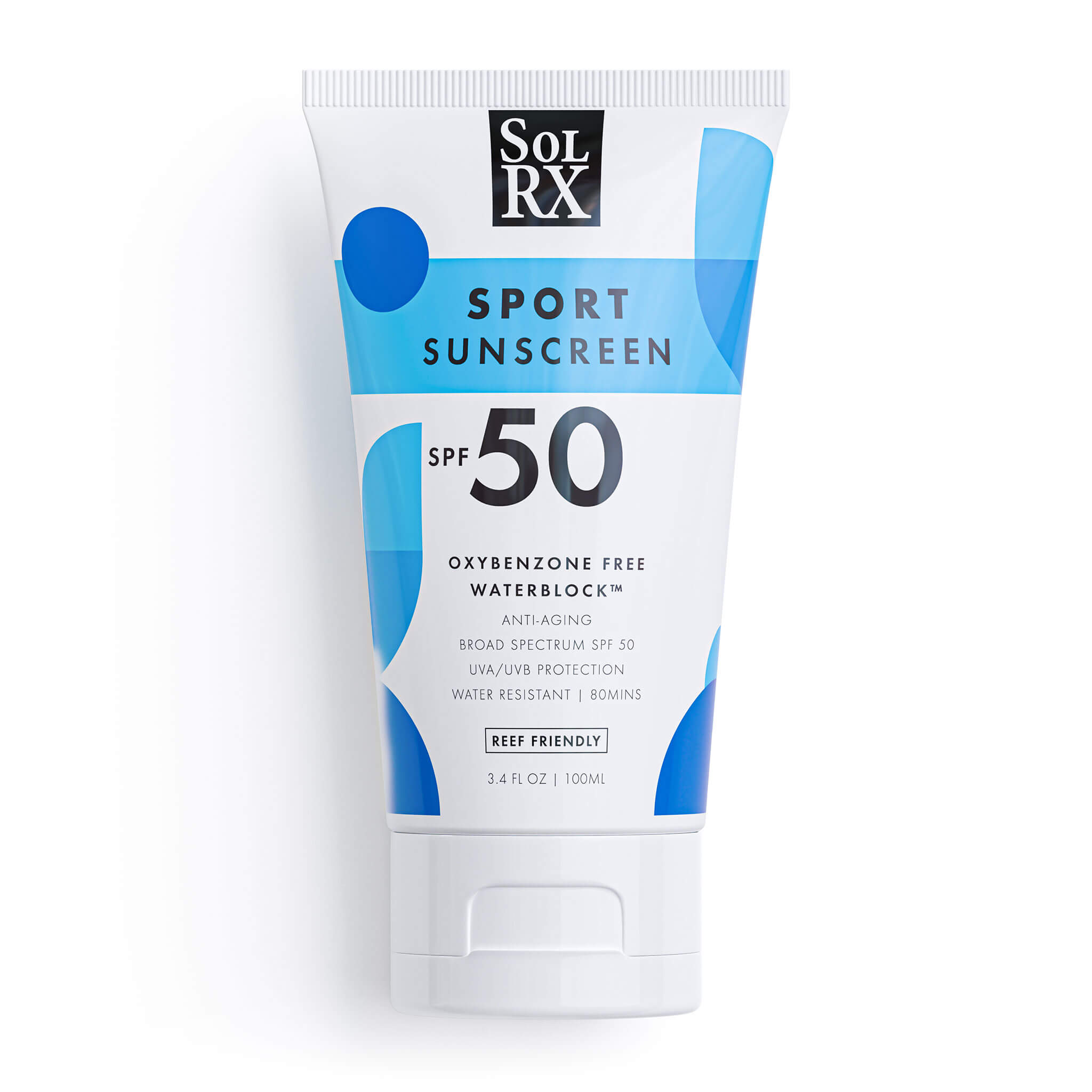
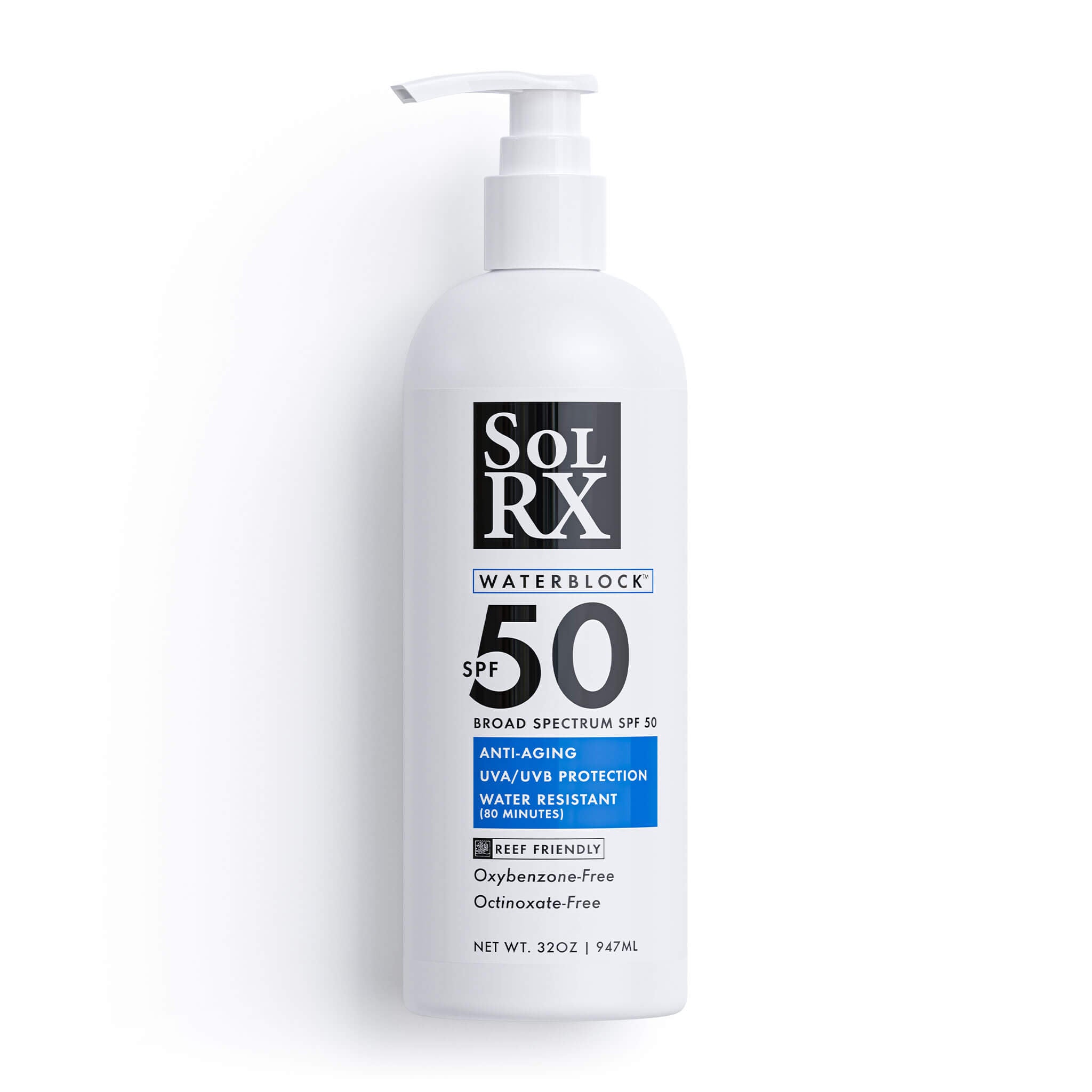
Sunscreen built for the water. SolRX Waterblock lotion is independently tested for 8-hour water resistance. Sprays rated water resistant 80 minutes. Reef-safe, oxybenzone-free, broad-spectrum. Dermatologist-tested. Made in USA.


What Is Water Resistant Sunscreen?
Water resistant sunscreen is formulated to maintain its SPF protection even during exposure to water and sweat. The FDA defines two water resistance ratings: 40 minutes and 80 minutes. Any sunscreen claiming water resistance must state one of these two timeframes on the label, tested under controlled conditions.
The term waterproof sunscreen no longer exists in FDA-regulated labeling. The FDA banned the word "waterproof" from sunscreen labels in 2013 because no sunscreen is completely impervious to water. What people commonly call waterproof sunscreen is technically water resistant sunscreen, with an 80-minute rating being the highest level of water resistance currently recognized.
SolRX Waterblock lotions go further than the standard 80-minute rating. Clinically tested through AMA Laboratories, the gold standard in independent sunscreen testing, Waterblock technology maintains SPF protection for 8 hours of water exposure. That is six times the standard maximum water resistance rating, making it the most water resistant sunscreen lotion available.
For swimmers, surfers, athletes, and anyone spending extended time in or near water, the difference between standard water resistant sunscreen and SolRX Waterblock is the difference between reapplying every hour and having real all-day coverage.
Waterproof vs Water Resistant Sunscreen: What the Labels Actually Mean
The waterproof vs water resistant distinction matters more than most people realize. Here is what the terms actually mean when you are standing in the sunscreen aisle.
No sunscreen is waterproof. The FDA removed that claim from sunscreen labeling in 2013. A sunscreen labeled water resistant must have been tested using the FDA's standardized protocol, which involves subjects swimming or sweating during timed intervals while their SPF is measured before and after. A product can only claim water resistance if it maintains its SPF rating after either 40 or 80 minutes of water exposure.
Beyond the 80-minute standard, SolRX Waterblock technology has been independently tested and verified to maintain SPF protection for 8 full hours of water immersion. This is not a marketing claim. It is a clinically documented result from AMA Laboratories testing.
When you see "water resistant" on a label without a timeframe, that is a red flag. FDA-compliant labeling requires the specific duration. Always check for "water resistant (40 minutes)" or "water resistant (80 minutes)" on any sunscreen you plan to use in or near water.
How SolRX Waterblock Technology Works
Standard sunscreens, even those rated water resistant, rely on formulas that gradually wash away with repeated water exposure. The UV filters are suspended in a base that water eventually penetrates and displaces. This is why most sunscreens need reapplication every 40 to 80 minutes in the water.
SolRX Waterblock technology uses a proprietary bonding process that adheres the UV filter complex to the skin at a molecular level. Rather than sitting on top of the skin in a water-soluble base, Waterblock forms a continuous protective barrier that resists displacement even during prolonged immersion, heavy sweating, and physical activity.
The result is 8-hour clinically tested water resistance. The formula stays where you put it, maintains its SPF rating through full days of water activity, and does not run into your eyes. For golfers, runners, surfers, and outdoor workers who cannot stop to reapply every hour, that staying power is the core value proposition.
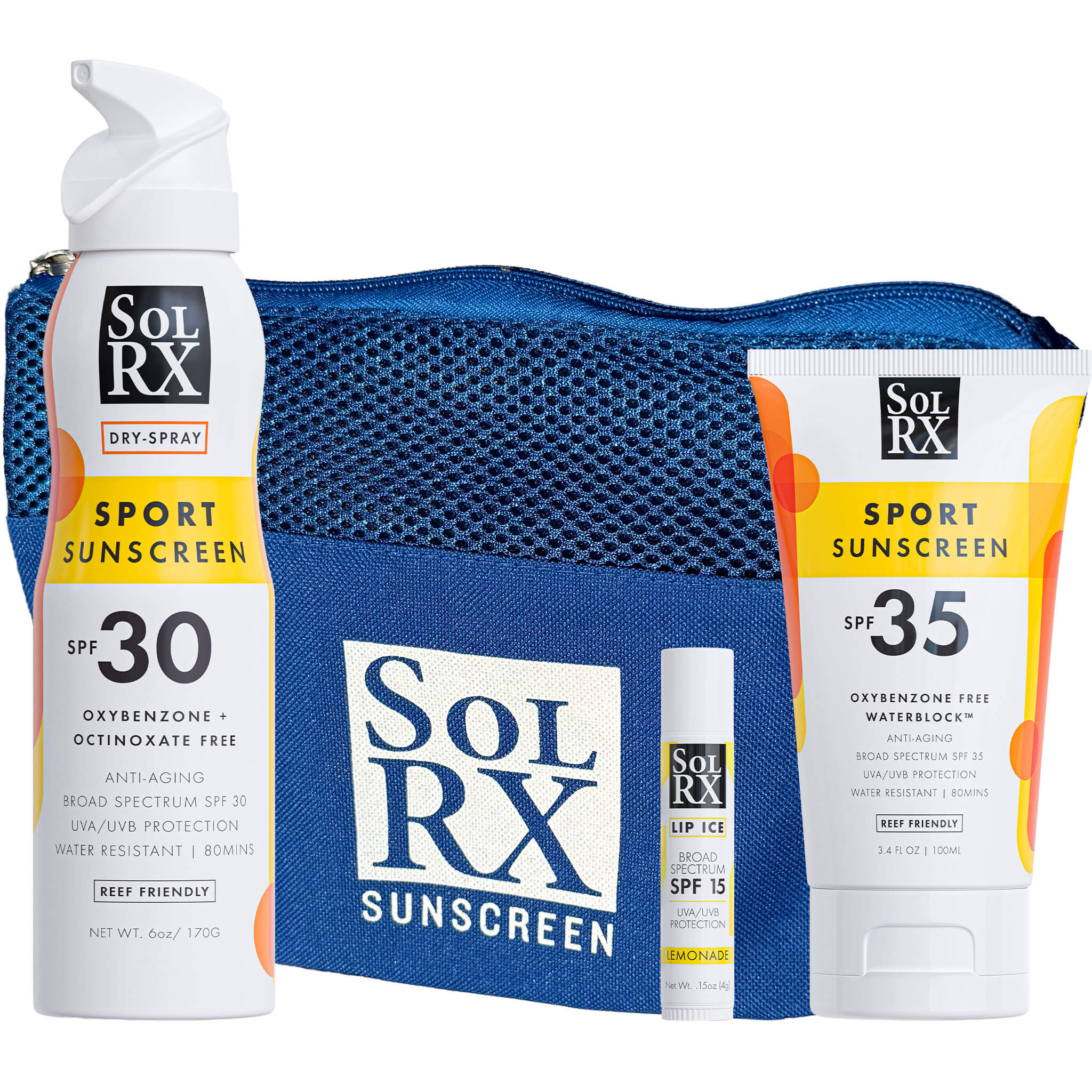
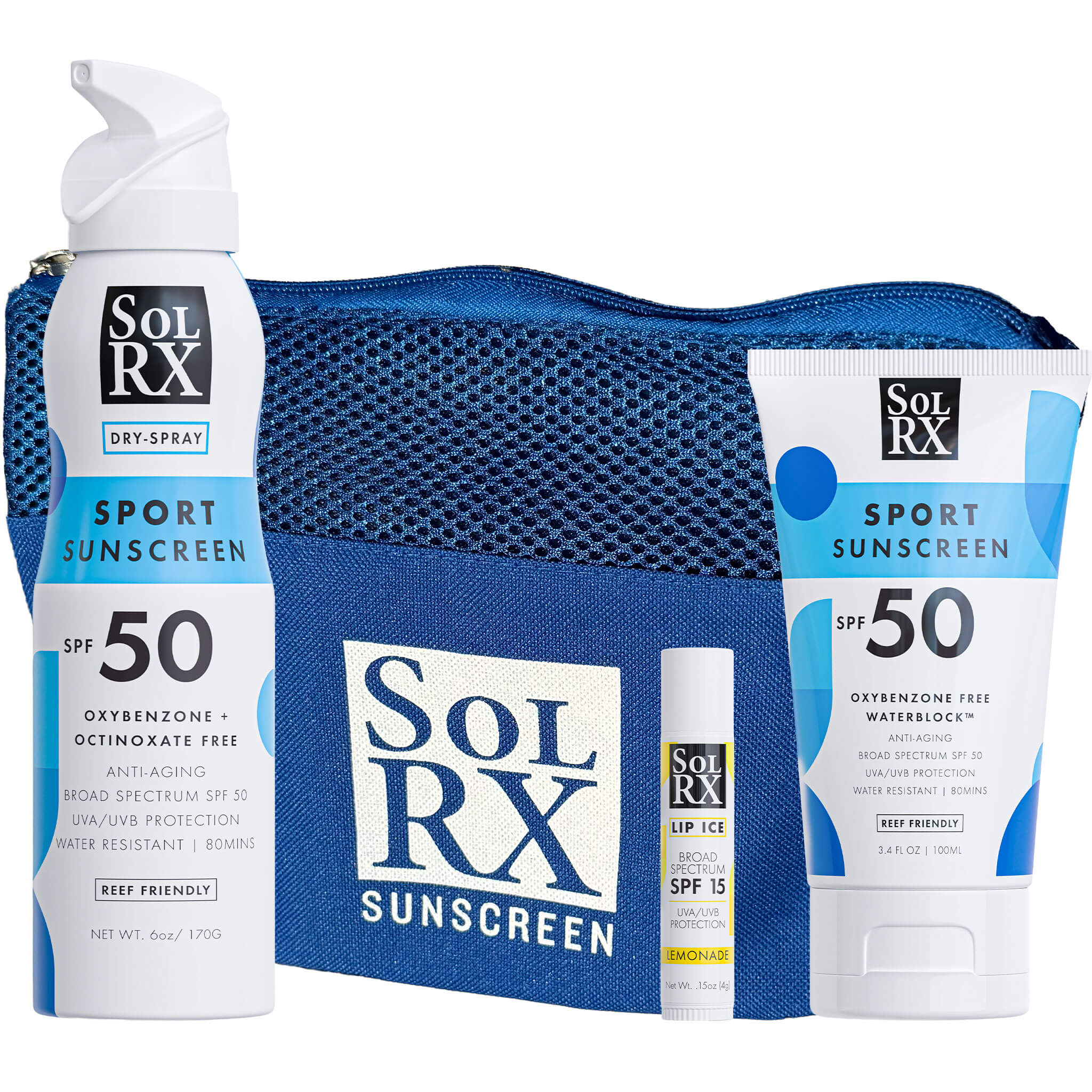
Waterblock technology is available in SolRX lotion formulas in SPF 35 and SPF 50. It is important to note that Waterblock technology applies exclusively to SolRX lotions. SolRX spray formulas carry a standard 80-minute water resistance rating, which is the highest available in a spray format.
Which SPF Level Do You Need for Water Activities?
For any activity involving water, SPF 50 is the stronger choice. Here is why.
Water reflects UV radiation. Depending on conditions, water surfaces can reflect up to 25% of incoming UV rays back at you, effectively increasing your UV exposure compared to being on land. Combined with the fact that water strips sunscreen faster than dry conditions, the case for higher SPF in aquatic environments is clear.
SPF 30 blocks approximately 97% of UVB rays. SPF 50 blocks approximately 98%. That one percent sounds small until you consider it represents a 33% increase in UV exposure over SPF 50. For long days on the water, that margin matters.
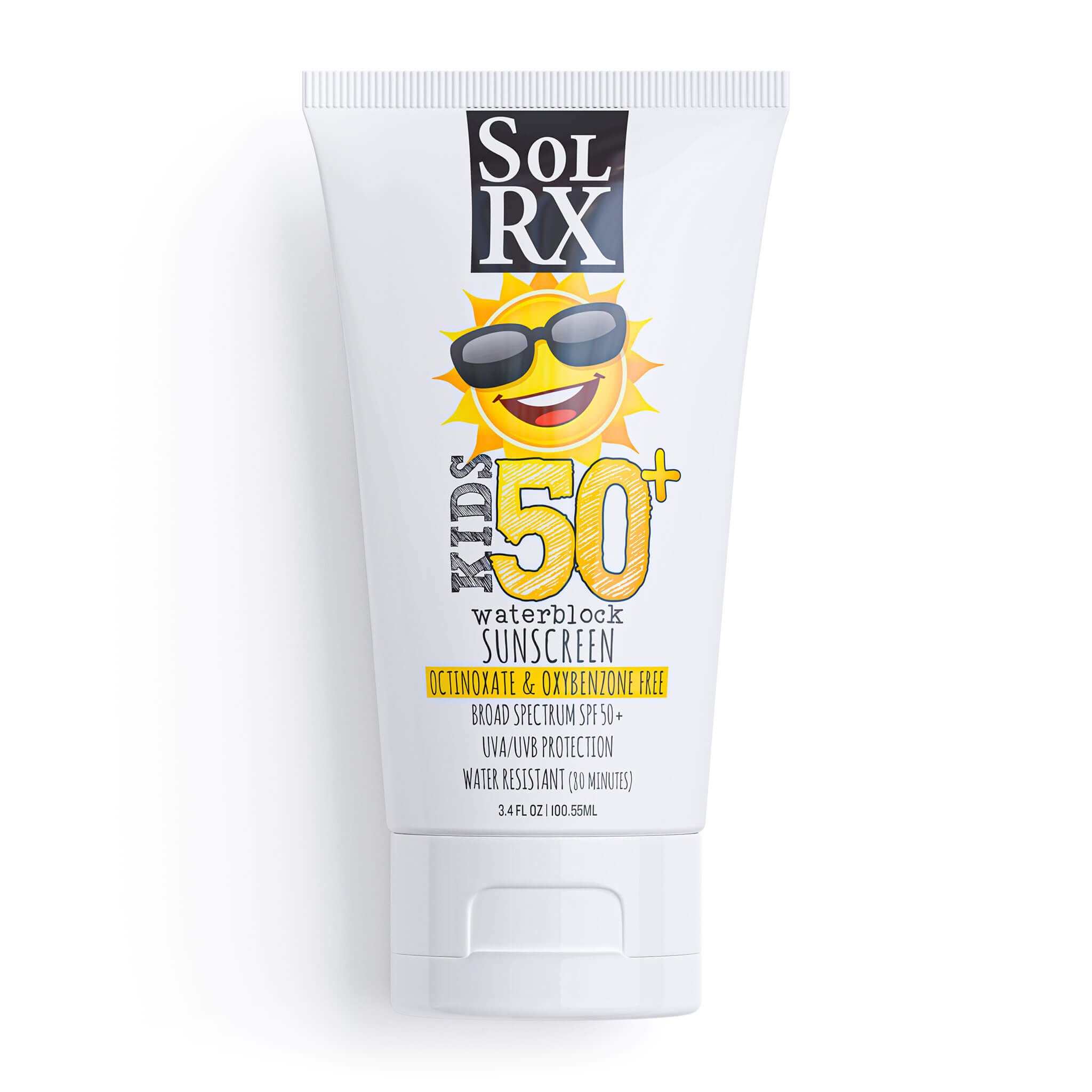
The American Academy of Dermatology recommends SPF 30 as a minimum for everyday use and SPF 50 for extended outdoor and water activities. For children, the recommendation is SPF 50 and above with a water resistant formula specifically designed for sensitive skin, like the SolRX Kids SPF 50 Waterblock.
How to Apply Water Resistant Sunscreen for Maximum Protection
Water resistant sunscreen only works when applied correctly. Most sunscreen failures in the water come from under-application and missed reapplication, not from formula failure.
- Apply before you get in the water. Apply sunscreen 15 to 30 minutes before sun exposure to allow the formula to set on the skin. Getting in the water immediately after application before the formula has settled reduces adhesion and effectiveness.
- Use the right amount. The FDA recommends one ounce, roughly a full shot glass, for complete body coverage. Most people apply 25 to 50 percent less than they need. Under-application proportionally reduces the SPF you actually receive.
- Use the 3-finger rule for your face. For facial application, squeeze sunscreen across three fingers and apply that full amount to your face and neck. Most people apply far less than needed on the face.
- Reapply after towel drying. Even Waterblock technology benefits from reapplication after towel drying. Toweling off physically removes some product from the skin surface.
- Do not forget high-exposure areas. Ears, the back of the neck, tops of feet, and the scalp line are commonly missed and among the highest-risk areas for sun damage during water activities.
- Use a dedicated face formula for your face. A face-specific formula gives you lighter coverage without sacrificing protection and reduces the risk of product running into your eyes during activity.
Water Resistant Sunscreen for Athletes and Outdoor Workers
For people whose sun exposure is not recreational but occupational or athletic, the requirements for sunscreen go beyond what most consumer formulas deliver.
Athletes need sunscreen that stays on during high-output activity, does not migrate into eyes during sweating, does not compromise grip, and does not require constant reapplication that interrupts performance. Outdoor workers need a formula reliable enough for a full shift in direct sun without degrading or requiring mid-day reapplication that may not always be practical.
SolRX Waterblock was developed with exactly this use case in mind. The 8-hour water resistance rating was not designed for casual beach use. It was designed for the golfer who needs coverage for 18 holes, the triathlete cycling and running after a swim, and the construction worker who cannot step away to reapply every 90 minutes.
The formula is non-greasy and absorbs quickly, which means it does not affect grip on equipment, steering wheels, or tools. It is also reef-safe and oxybenzone-free, making it the right choice for athletes who train in or near natural water.
Is Mineral Sunscreen Water Resistant?
Yes. Mineral sunscreen can be formulated to be water resistant, and SolRX offers mineral formulas with water resistance ratings for exactly this reason.
The common assumption is that mineral sunscreen washes off easily because zinc oxide and titanium dioxide are physical particles sitting on the skin surface. While this was true of older mineral formulas, modern mineral sunscreen technology uses binders and film-forming agents that significantly improve water resistance.
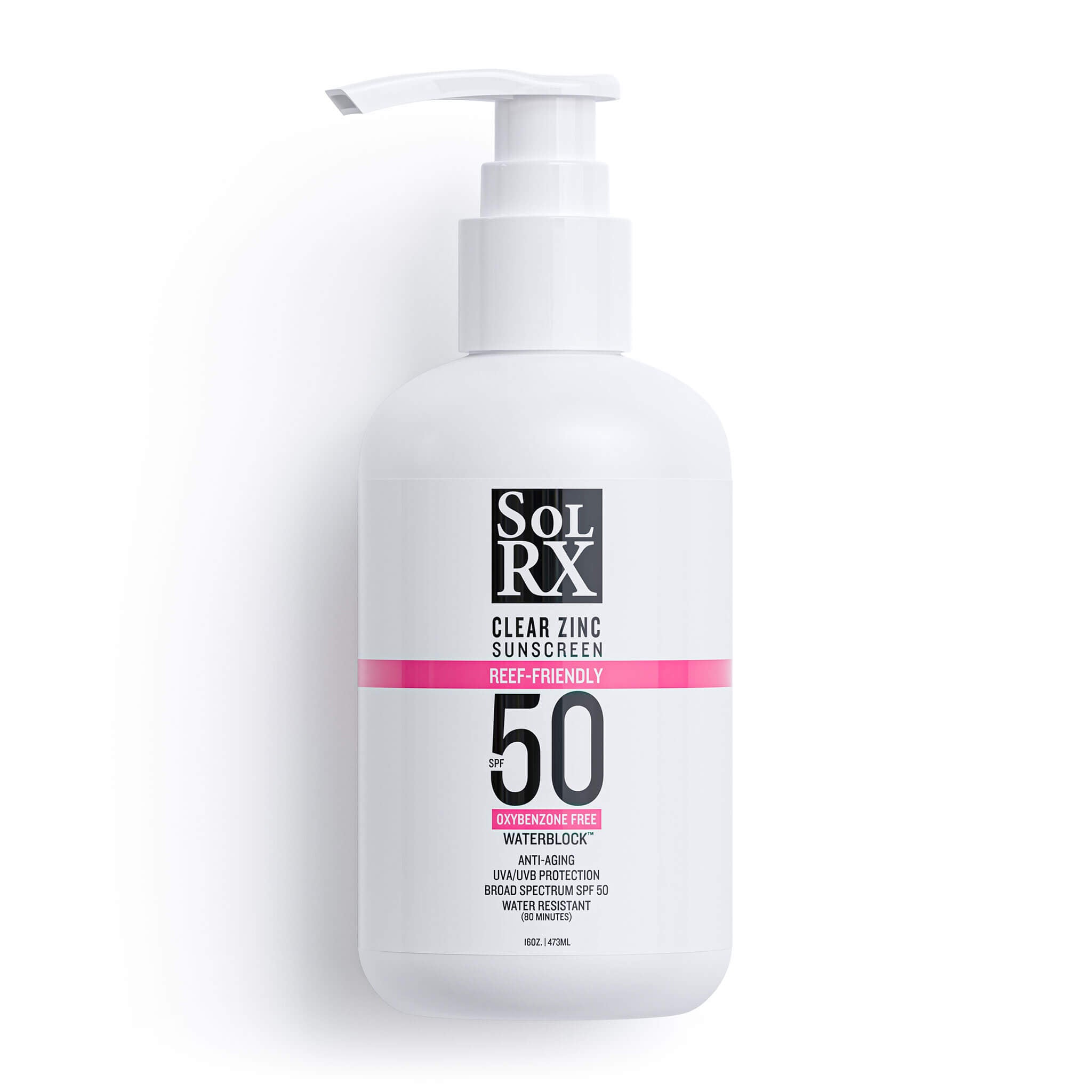
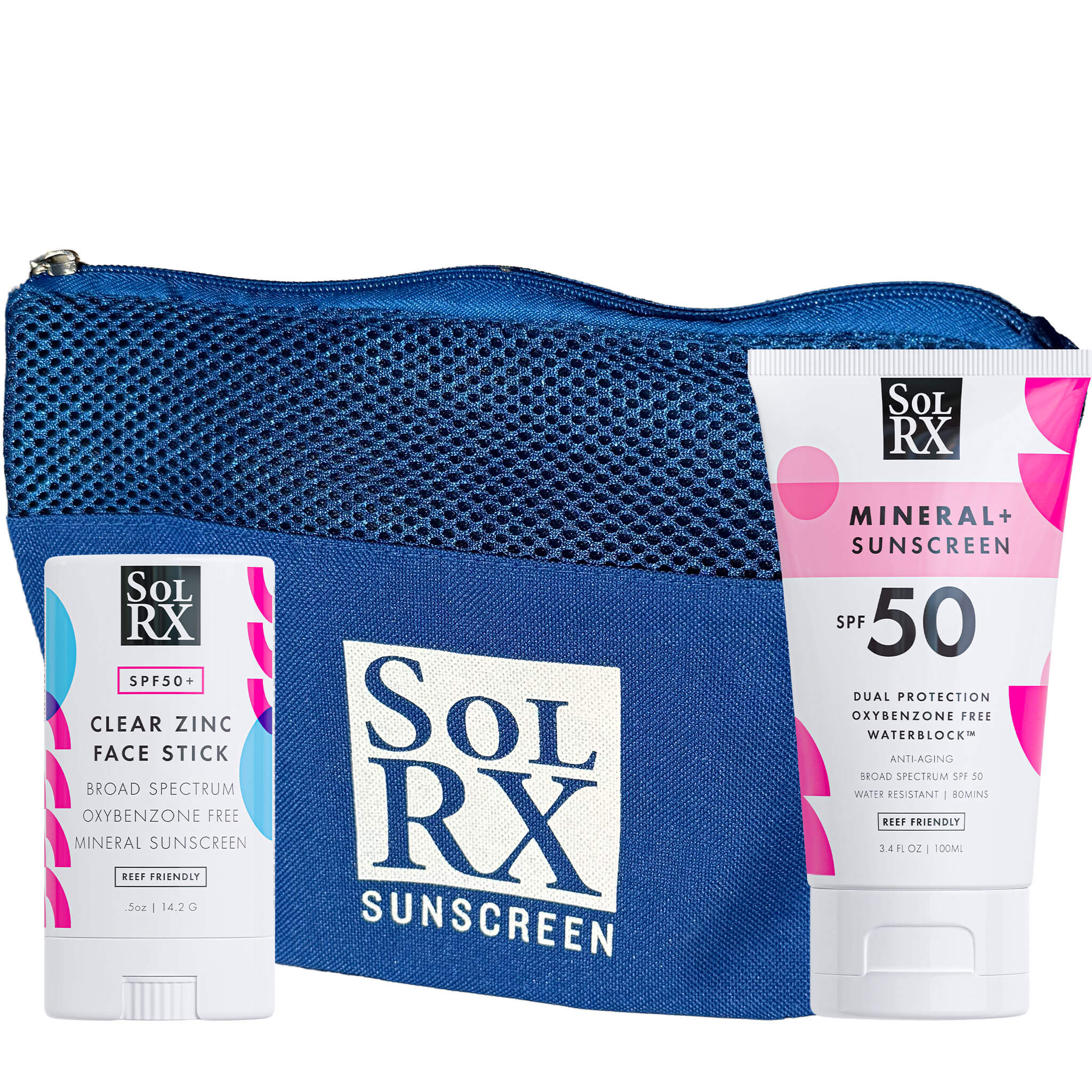
SolRX mineral sunscreen formulas carry an 80-minute water resistance rating. For those who prefer mineral-only formulas for sensitive skin, reef-safe compliance, or personal preference, the SolRX mineral range provides the maximum water resistance available in a mineral format.
For the highest water resistance available anywhere in the SolRX lineup, the Waterblock lotion formulas using the clinically tested 8-hour technology are the top choice. For those who need a mineral-only formula, the 80-minute rated mineral options deliver the best mineral water resistance on the market.
How Long Does Water Resistant Sunscreen Really Last?
This is one of the most misunderstood questions in sun care, and the answer has two parts.
First, water resistance duration and SPF duration are different things. Water resistance measures how long a formula maintains its SPF rating during water exposure. SPF itself, even on dry skin, degrades with UV exposure over time. The FDA recommends reapplying all sunscreen every two hours regardless of water resistance rating, because UV degradation affects the formula even when you are not in the water.
Second, the water resistance clock starts when you enter the water, not when you apply. SolRX Waterblock's 8-hour water resistance means 8 hours of water immersion while maintaining SPF. On dry skin between water exposures, standard reapplication guidelines apply.
For practical purposes: apply SolRX Waterblock 15 to 30 minutes before activity, reapply every two hours during dry periods, and reapply after towel drying regardless of time elapsed. The 8-hour rating gives you a meaningful buffer during extended water activity, but it is not a substitute for consistent reapplication habits.
Key Takeaways
-
All SolRX Waterblock formulas are reef-safe and oxybenzone-free.
Protecting your skin and the ocean without compromise. -
SolRX Waterblock is clinically tested for 8-hour water resistance.
Six times the FDA maximum standard, verified by AMA Laboratories. -
Mineral sunscreen can be water resistant too.
SolRX mineral formulas carry an 80-minute water resistance rating for those who prefer zinc oxide only.
Sources
- U.S. Food and Drug Administration. Sunscreen Drug Products for Over-the-Counter Human Use. FDA.gov. 2013.
- U.S. Food and Drug Administration. Questions and Answers: FDA announces new requirements for over-the-counter sunscreen products marketed in the US. FDA.gov.
- American Academy of Dermatology. Sunscreen FAQs. AAD.org.
- AMA Laboratories. Independent SPF and Water Resistance Testing Standards. AMALabs.com.
- World Health Organization. Ultraviolet Radiation and the INTERSUN Programme. WHO.int.
- Skin Cancer Foundation. Ask the Expert: Does a High SPF Protect My Skin Better? SkinCancer.org.
- Diffey, B.L. When Should Sunscreen Be Reapplied? Journal of the American Academy of Dermatology. 2001.
- National Oceanic and Atmospheric Administration. UV Index Scale. NOAA.gov.
- American Academy of Dermatology. How to Select a Sunscreen. AAD.org.
- Gonzalez, H. et al. Percutaneous Absorption of the Sunscreen Benzophenone-3 after Repeated Whole-Body Applications. Archives of Dermatology. 2006.

