


After sun care is the half of sun care that happens once you come inside. The SolRX Aftercare line puts moisture back into skin after sun, wind, and water: a cooling aloe gel, a hydrating aloe lotion with hyaluronic acid, and a fragrance-free hemp lotion. Pick the texture your skin is asking for.
What Is After Sun Care?
After sun care is any product you apply after time outdoors to restore moisture and comfort. Sunscreen is the protection. After sun is the recovery.
A long day in the sun, wind, or water pulls moisture from the outer layer of your skin. By evening, skin can feel tight, dry, and warm, even without a burn. Good after sun answers that with hydration first. Humectants like aloe vera, glycerin, and hyaluronic acid draw water into the skin. Emollient oils and butters help hold it there.
After sun is a cosmetic category. It is built to cool, hydrate, and comfort, not to treat a burn. Think of it as a moisturizer designed for one specific moment: the hour after you come inside.
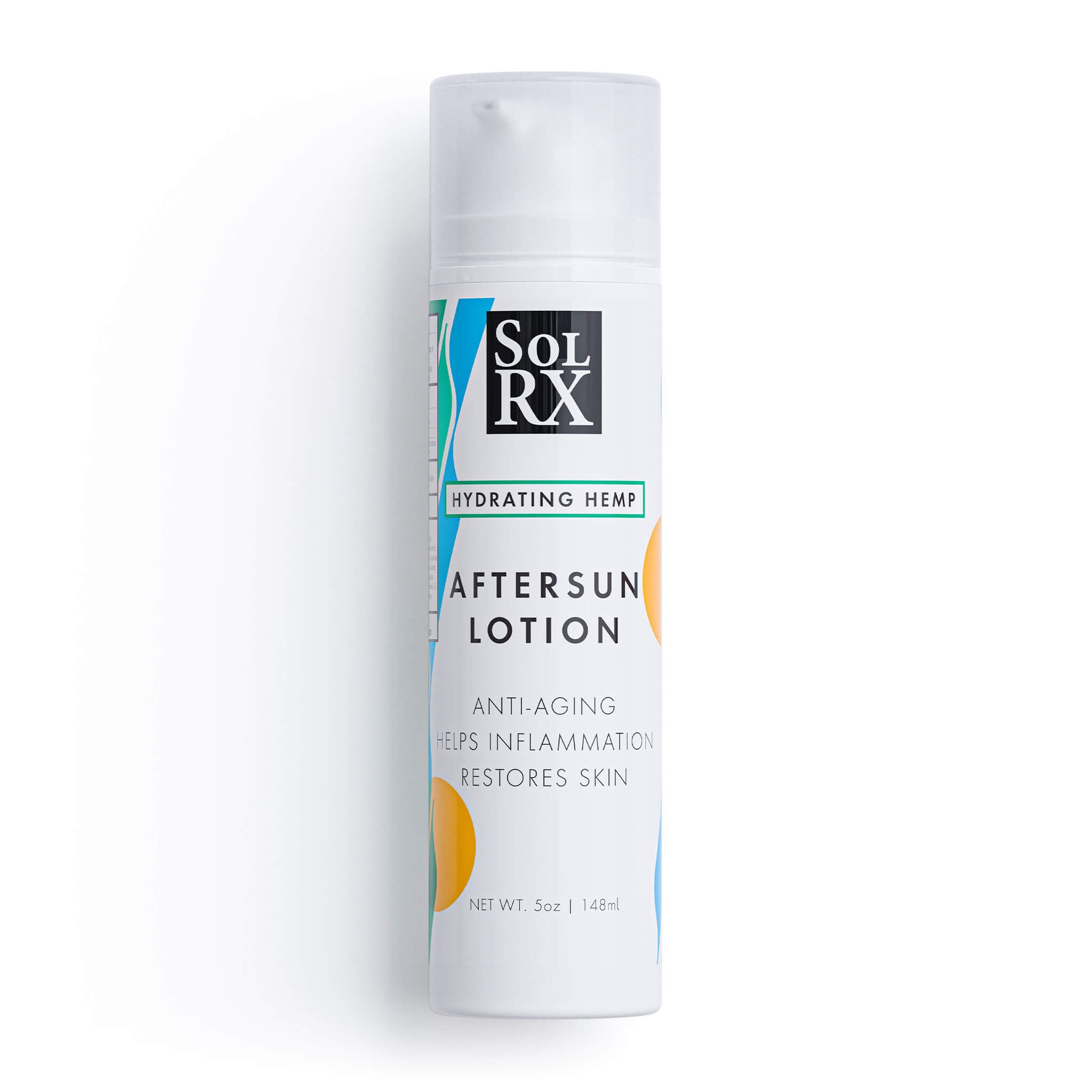
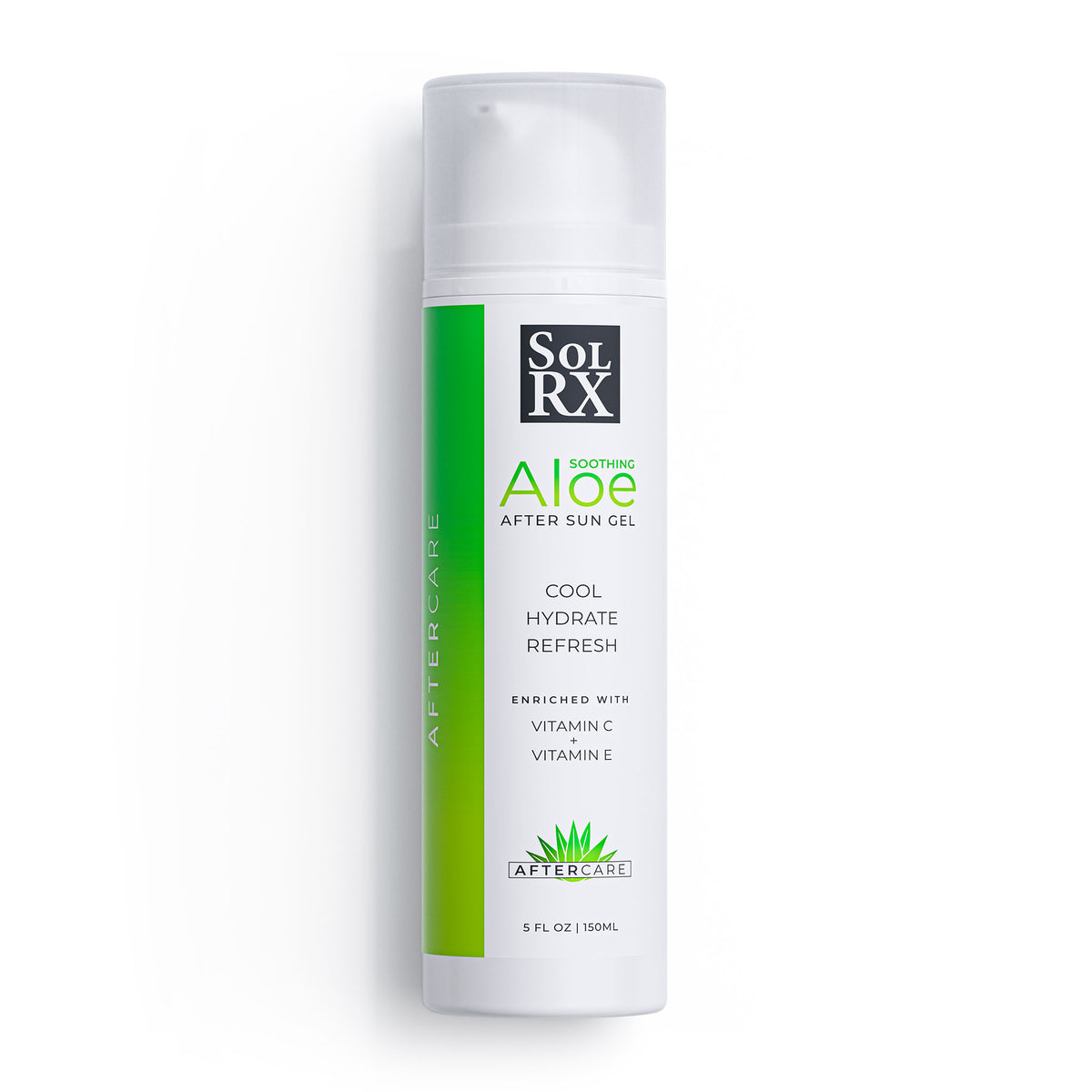
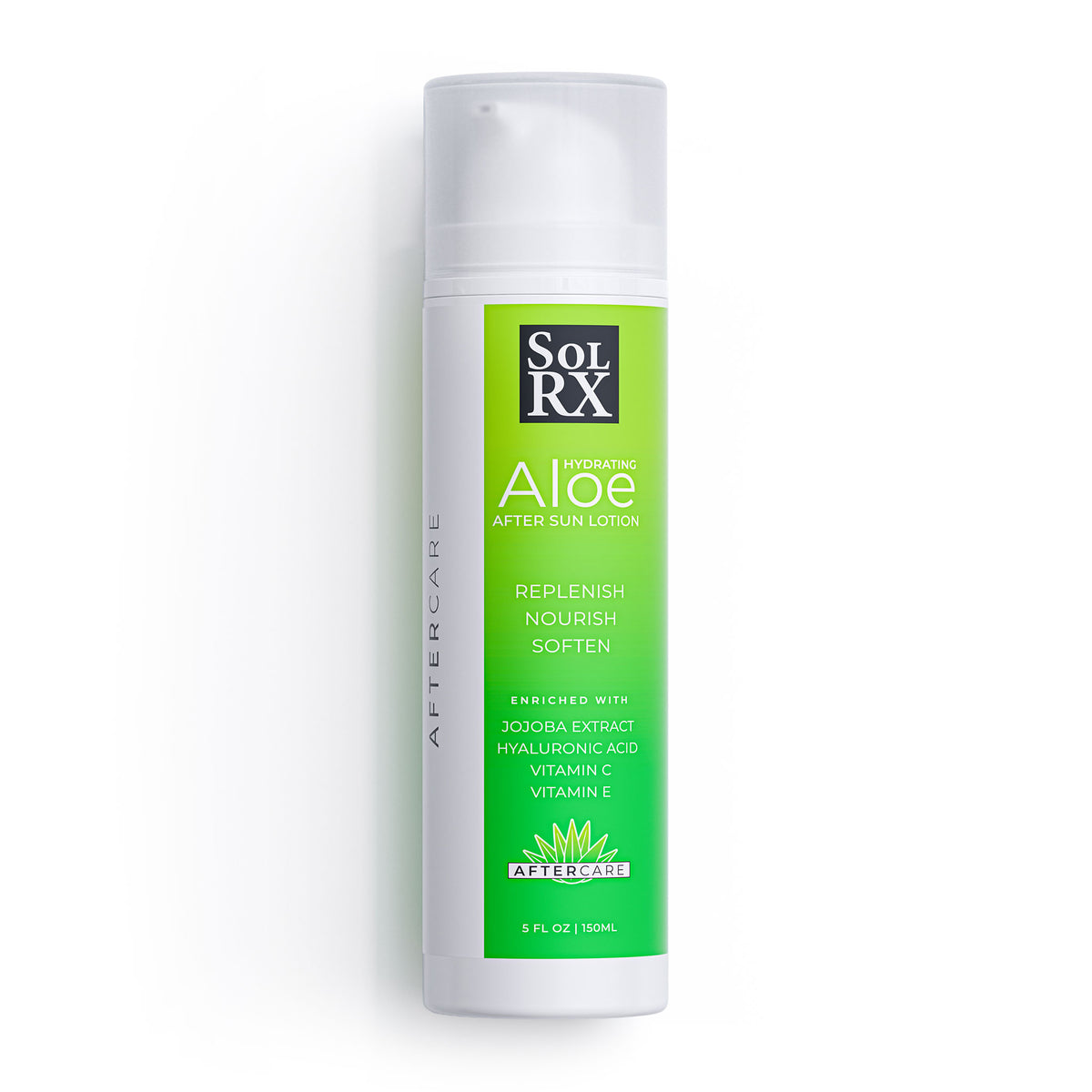
The SolRX Aftercare line covers that moment three ways. The Soothing Aloe After Sun Gel is light and cooling. The Hydrating Aloe After Sun Lotion is richer, with hyaluronic acid and jojoba. The Hydrating Hemp Aftersun Lotion is the richest of the three, built on hemp seed oil, shea butter, and argan oil, and formulated without fragrance.
After Sun Gel or After Sun Lotion: How to Choose
Gel and lotion do the same job in different textures. The right one depends on how your skin feels and what the rest of your evening looks like.
The gel is for warm skin and hot nights. SolRX Soothing Aloe After Sun Gel is water-based and goes on cool. It absorbs fast and leaves nothing heavy behind, which makes it the pick for humid climates, combination skin, and anyone who wants to get dressed right away. It's made with real aloe vera leaf juice and finished with vitamins C and E.
The lotion is for dry skin and long seasons. SolRX Hydrating Aloe After Sun Lotion pairs aloe with sodium hyaluronate, the salt form of hyaluronic acid, plus jojoba, sunflower, and coconut oils. It hydrates, then helps hold that hydration in. Reach for it when skin feels tight: after a ski day, after a long flight, or every day after the shower.
The hemp lotion is for anyone who prefers fragrance-free. SolRX Hydrating Hemp Aftersun Lotion has no added fragrance and the richest finish in the line. Both aloe formulas contain fragrance, and the gel also contains color, so the hemp lotion is the clear choice if you avoid either.
You can also use two. Gel first to cool, lotion second to nourish. On big days outside, that layering covers both jobs.
What Good After Sun Care Contains
Aloe vera is the most familiar after sun ingredient for a reason. The American Academy of Dermatology recommends a moisturizer containing aloe vera or soy to help soothe sunburned skin. The National Center for Complementary and Integrative Health notes that clinical research suggests topical aloe gel may speed burn healing and ease burn-related discomfort, and that topical aloe is generally well tolerated, with occasional reports of burning, itching, or eczema.
Hyaluronic acid is found naturally in skin, where it helps skin hold water. As a skincare ingredient, it works as a humectant, drawing moisture to the surface. The American Academy of Dermatology lists hyaluronic acid, glycerin, jojoba oil, and shea butter among the ingredients to look for when skin is dry.
Plant oils and butters soften skin and slow moisture loss. Across the SolRX Aftercare line, that means jojoba, sunflower, coconut, hemp seed, argan, and shea.
Vitamins C and E are antioxidants that appear throughout modern skincare. In both aloe formulas, they round out the hydration with conditioning care.
What you won't find matters too. All three SolRX Aftercare formulas are made without petroleum, benzocaine, or lidocaine. Penn State Health advises skipping petroleum on sunburned skin because it can trap heat, and skipping benzocaine and lidocaine because they can irritate skin.
How to Use After Sun Care
The routine takes a few minutes and works best right after you come inside.
- Rinse off with a cool shower. Cool water feels better on warm skin and clears away sweat, salt, chlorine, and sunscreen.
- Pat dry and leave skin slightly damp. Dermatologists recommend applying moisturizer while skin is still damp to help trap water in.
- Apply generously everywhere the sun reached. Shoulders, the back of the neck, the tops of the ears, and the tops of the feet are the most commonly missed. Keep products away from the eyes.
- Reapply whenever skin feels tight or warm, including the next morning.
- Drink extra water. The American Academy of Dermatology notes that a sunburn draws fluid to the skin's surface and away from the rest of the body.
For extra cooling, keep the Soothing Aloe After Sun Gel in the refrigerator.
After Sun Care Belongs in Your Ski Bag
Most people pack after sun for the beach. The mountain needs it as much.
The Skin Cancer Foundation reports that snow reflects up to 80 percent of UV rays, so the sun reaches you twice, from above and below. UV exposure also climbs 4 to 5 percent with every 1,000 feet of elevation. Then there is wind. The Foundation notes that skiers and snowboarders can reach speeds of 75 miles per hour, and wind is a constant challenge for their skin.
The result is familiar to anyone who has spent a full day on the slopes. Face, neck, and hands feel tighter than they ever do after a beach day. The Hydrating Aloe After Sun Lotion is made for that moment. Hyaluronic acid hydrates. Jojoba softens. It works as well in a slopeside condo as it does in a beach rental.
The same logic applies to high desert hikes, sailing, golf in dry climates, and long flights home. Wherever the air is dry and the light is strong, after sun belongs in the bag.
Aftercare Starts Before You Go Outside
After sun restores comfort. It does not undo UV exposure. The American Academy of Dermatology recommends a broad-spectrum, water-resistant sunscreen with SPF 30 or higher on all skin not covered by clothing.
SolRX Waterblock lotions hold 8 hours of independently tested water resistance for days in and around the water. The Face and Lip collection covers the areas that see the most sun. The Mineral collection offers zinc oxide protection for sensitive skin, and our kids formulas are tear-free for younger skin. If you want both halves of the day in one order, the SPF 50 Sun and Recovery Bundle pairs protection with Hydrating Hemp Aftersun.
Protect first. Recover after.
After Sun Is Not Only for Sunburn
The most common misconception about after sun is that it is a sunburn product. Most people buy aloe only after they burn. That gets the routine backward.
Every long day outside dries skin, with or without redness. Sun, wind, salt water, chlorine, and dry cabin air all take moisture with them. After sun works best as a habit: after the beach, after the slopes, after the round, after the flight.
If you do burn, a moisturizer can make skin feel more comfortable, but it is not a treatment. The CDC notes that symptoms of a minor sunburn usually peak within 24 to 36 hours and resolve in 3 to 5 days. A burn that blisters over a large area, or comes with fever, chills, or feeling unwell, belongs with a doctor.
The SolRX Aftercare Routine at a Glance
- After the beach: cool shower, then the Soothing Aloe After Sun Gel.
- After the mountain: the Hydrating Aloe After Sun Lotion on face, neck, and hands.
- Fragrance-free preference: the Hydrating Hemp Aftersun Lotion.
- Every day: any of the three on damp skin after the shower.
- Big days: gel first, lotion second.
Sun care has two halves. Now you have both.
Key Takeaways
-
Aftercare works best after real protection.
SolRX Waterblock lotions hold 8 hours of independently tested water resistance. -
Your face and lips need their own care.
The Face and Lip collection covers daily protection for the areas that see the most sun. -
Protection and recovery can come as a set.
The SPF 50 Sun and Recovery Bundle pairs sunscreen with after sun care in one order.
Sources
- American Academy of Dermatology. How to Treat Sunburn. Last updated May 20, 2024.
- American Academy of Dermatology. Dermatologists' Top Tips for Relieving Dry Skin.
- National Center for Complementary and Integrative Health. Aloe Vera: Usefulness and Safety. 2025.
- National Institute of Environmental Health Sciences. Aloe Vera.
- Sharma S, Alfonso AR, Gordon AJ, et al. Second-Degree Burns and Aloe Vera: A Meta-Analysis and Systematic Review. Advances in Skin and Wound Care. 2022;35(11):1-9.
- Papakonstantinou E, Roth M, Karakiulakis G. Hyaluronic Acid: A Key Molecule in Skin Aging. Dermato-Endocrinology. 2012;4(3):253-258.
- The Skin Cancer Foundation. The Skin Cancer Foundation Reminds Winter Sports Enthusiasts to Wear Sun Protection. December 11, 2025.
- The Skin Cancer Foundation. Peak Performance Skin Care Tips. Updated November 4, 2025.
- Centers for Disease Control and Prevention, NIOSH. Sun Exposure: Sunburn.
- Penn State Health Children's Hospital. How to Feel Better After a Bad Sunburn.

